Six Liters and Counting: Tuskegee Airmen
The blood, sweat, and tears of heroes flow through Edwin Lester's powerful tribute, "6 Liters and Counting." This evocative narrative artwork immortalizes the legendary Tuskegee Airmen, America's first Black military aviators who fought two wars simultaneously: one against fascism in the skies of World War II, and another against racism at home.
Lester's masterful composition centers on a striking symbol: the human figure formed by blood. This figure inspired the artwork's title, "6 Liters and Counting," as the human body contains 6 liters of blood, and every drop was willingly given by these courageous pilots who served from 1943 to 1945.
The title "6 Liters and Counting" carries dual meaning. It commemorates the ultimate sacrifice: 66 Tuskegee-trained aviators lost their lives in combat during World War II. At the same time, another 32 became prisoners of war after being shot down over enemy territory.
Each pilot gave their six liters of blood, some drop by drop through wounds sustained in battle, others in the ultimate sacrifice of their lives. But "and counting" extends this legacy forward, honoring all African American pilots and military members who continue to build upon this foundation of courage, serving with distinction to this day.
The date 1941, subtly incorporated into the composition with droplets forming the numerals against the human figure, marks the beginning of the Tuskegee program and roots this tribute in the precise moment when these pioneering aviators first took to the skies.
The Tuskegee Airmen were the first African American military aviators in the United States Armed Forces, trained at the segregated Tuskegee Army Air Field in Alabama beginning in 1941. Despite systemic racism and widespread doubt about their abilities, these extraordinary men proved themselves among the most skilled and respected fighter pilots of World War II. Between 1943 and 1945, they flew more than 15,000 combat sorties, earning three Distinguished Unit Citations and over 150 Distinguished Flying Crosses.
Using his signature chiaroscuro technique, the dramatic interplay of light and shadow, the artist creates rich, atmospheric layers with watercolor-like passages that contrast strikingly with the precise rendering of the Red Tail aircraft, symbolizing both the fragility of human life and the enduring strength of legacy.
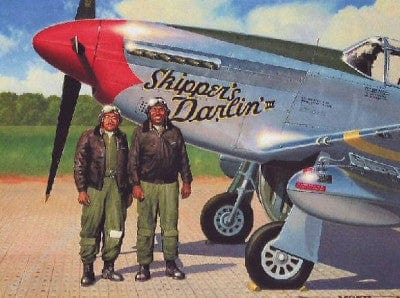
At the heart of this artwork lies the iconic Red Tail P-51 Mustang, the distinctive aircraft that gave these airmen their legendary nickname. The 332nd Fighter Group painted the tails of its fighters a deep, unmistakable red for identification during bomber escort missions, becoming so sought after that Allied bomber crews specifically requested "Red Tail" escorts.
These pilots escorted bombers and paved the way for the full integration of the U.S. military when President Harry S. Truman issued Executive Order 9981 in 1948, desegregating the armed forces. This artwork stands as both a memorial and a source of motivation, a reminder that the Tuskegee Airmen overcame insurmountable odds to prove that excellence knows no color. Their blood, sweat, and tears purchased not just victory in war, but advancement for generations to come.
Philadelphia-based artist Edwin Lester, a self-taught master of narrative conceptual painting, preserves cultural heritage and educates viewers about pivotal moments in African American history. His emotionally charged compositions transform historical facts into visceral experiences, making "6 Liters and Counting" an act of remembrance and respect for heroes who soared against both fascism and racism and emerged victorious in both battles.
Product Information
Product Information
Shipping & Returns
Shipping & Returns


Six Liters and Counting: Tuskegee Airmen
Six Liters and Counting: Tuskegee Airmen
The blood, sweat, and tears of heroes flow through Edwin Lester's powerful tribute, "6 Liters and Counting." This evocative narrative artwork immortalizes the legendary Tuskegee Airmen, America's first Black military aviators who fought two wars simultaneously: one against fascism in the skies of World War II, and another against racism at home.
Lester's masterful composition centers on a striking symbol: the human figure formed by blood. This figure inspired the artwork's title, "6 Liters and Counting," as the human body contains 6 liters of blood, and every drop was willingly given by these courageous pilots who served from 1943 to 1945.
The title "6 Liters and Counting" carries dual meaning. It commemorates the ultimate sacrifice: 66 Tuskegee-trained aviators lost their lives in combat during World War II. At the same time, another 32 became prisoners of war after being shot down over enemy territory.
Each pilot gave their six liters of blood, some drop by drop through wounds sustained in battle, others in the ultimate sacrifice of their lives. But "and counting" extends this legacy forward, honoring all African American pilots and military members who continue to build upon this foundation of courage, serving with distinction to this day.
The date 1941, subtly incorporated into the composition with droplets forming the numerals against the human figure, marks the beginning of the Tuskegee program and roots this tribute in the precise moment when these pioneering aviators first took to the skies.
The Tuskegee Airmen were the first African American military aviators in the United States Armed Forces, trained at the segregated Tuskegee Army Air Field in Alabama beginning in 1941. Despite systemic racism and widespread doubt about their abilities, these extraordinary men proved themselves among the most skilled and respected fighter pilots of World War II. Between 1943 and 1945, they flew more than 15,000 combat sorties, earning three Distinguished Unit Citations and over 150 Distinguished Flying Crosses.
Using his signature chiaroscuro technique, the dramatic interplay of light and shadow, the artist creates rich, atmospheric layers with watercolor-like passages that contrast strikingly with the precise rendering of the Red Tail aircraft, symbolizing both the fragility of human life and the enduring strength of legacy.
At the heart of this artwork lies the iconic Red Tail P-51 Mustang, the distinctive aircraft that gave these airmen their legendary nickname. The 332nd Fighter Group painted the tails of its fighters a deep, unmistakable red for identification during bomber escort missions, becoming so sought after that Allied bomber crews specifically requested "Red Tail" escorts.
These pilots escorted bombers and paved the way for the full integration of the U.S. military when President Harry S. Truman issued Executive Order 9981 in 1948, desegregating the armed forces. This artwork stands as both a memorial and a source of motivation, a reminder that the Tuskegee Airmen overcame insurmountable odds to prove that excellence knows no color. Their blood, sweat, and tears purchased not just victory in war, but advancement for generations to come.
Philadelphia-based artist Edwin Lester, a self-taught master of narrative conceptual painting, preserves cultural heritage and educates viewers about pivotal moments in African American history. His emotionally charged compositions transform historical facts into visceral experiences, making "6 Liters and Counting" an act of remembrance and respect for heroes who soared against both fascism and racism and emerged victorious in both battles.
Product Information
Product Information
Shipping & Returns
Shipping & Returns
Description
The blood, sweat, and tears of heroes flow through Edwin Lester's powerful tribute, "6 Liters and Counting." This evocative narrative artwork immortalizes the legendary Tuskegee Airmen, America's first Black military aviators who fought two wars simultaneously: one against fascism in the skies of World War II, and another against racism at home.
Lester's masterful composition centers on a striking symbol: the human figure formed by blood. This figure inspired the artwork's title, "6 Liters and Counting," as the human body contains 6 liters of blood, and every drop was willingly given by these courageous pilots who served from 1943 to 1945.
The title "6 Liters and Counting" carries dual meaning. It commemorates the ultimate sacrifice: 66 Tuskegee-trained aviators lost their lives in combat during World War II. At the same time, another 32 became prisoners of war after being shot down over enemy territory.
Each pilot gave their six liters of blood, some drop by drop through wounds sustained in battle, others in the ultimate sacrifice of their lives. But "and counting" extends this legacy forward, honoring all African American pilots and military members who continue to build upon this foundation of courage, serving with distinction to this day.
The date 1941, subtly incorporated into the composition with droplets forming the numerals against the human figure, marks the beginning of the Tuskegee program and roots this tribute in the precise moment when these pioneering aviators first took to the skies.
The Tuskegee Airmen were the first African American military aviators in the United States Armed Forces, trained at the segregated Tuskegee Army Air Field in Alabama beginning in 1941. Despite systemic racism and widespread doubt about their abilities, these extraordinary men proved themselves among the most skilled and respected fighter pilots of World War II. Between 1943 and 1945, they flew more than 15,000 combat sorties, earning three Distinguished Unit Citations and over 150 Distinguished Flying Crosses.
Using his signature chiaroscuro technique, the dramatic interplay of light and shadow, the artist creates rich, atmospheric layers with watercolor-like passages that contrast strikingly with the precise rendering of the Red Tail aircraft, symbolizing both the fragility of human life and the enduring strength of legacy.
At the heart of this artwork lies the iconic Red Tail P-51 Mustang, the distinctive aircraft that gave these airmen their legendary nickname. The 332nd Fighter Group painted the tails of its fighters a deep, unmistakable red for identification during bomber escort missions, becoming so sought after that Allied bomber crews specifically requested "Red Tail" escorts.
These pilots escorted bombers and paved the way for the full integration of the U.S. military when President Harry S. Truman issued Executive Order 9981 in 1948, desegregating the armed forces. This artwork stands as both a memorial and a source of motivation, a reminder that the Tuskegee Airmen overcame insurmountable odds to prove that excellence knows no color. Their blood, sweat, and tears purchased not just victory in war, but advancement for generations to come.
Philadelphia-based artist Edwin Lester, a self-taught master of narrative conceptual painting, preserves cultural heritage and educates viewers about pivotal moments in African American history. His emotionally charged compositions transform historical facts into visceral experiences, making "6 Liters and Counting" an act of remembrance and respect for heroes who soared against both fascism and racism and emerged victorious in both battles.