The Eclipse Jigsaw Puzzle
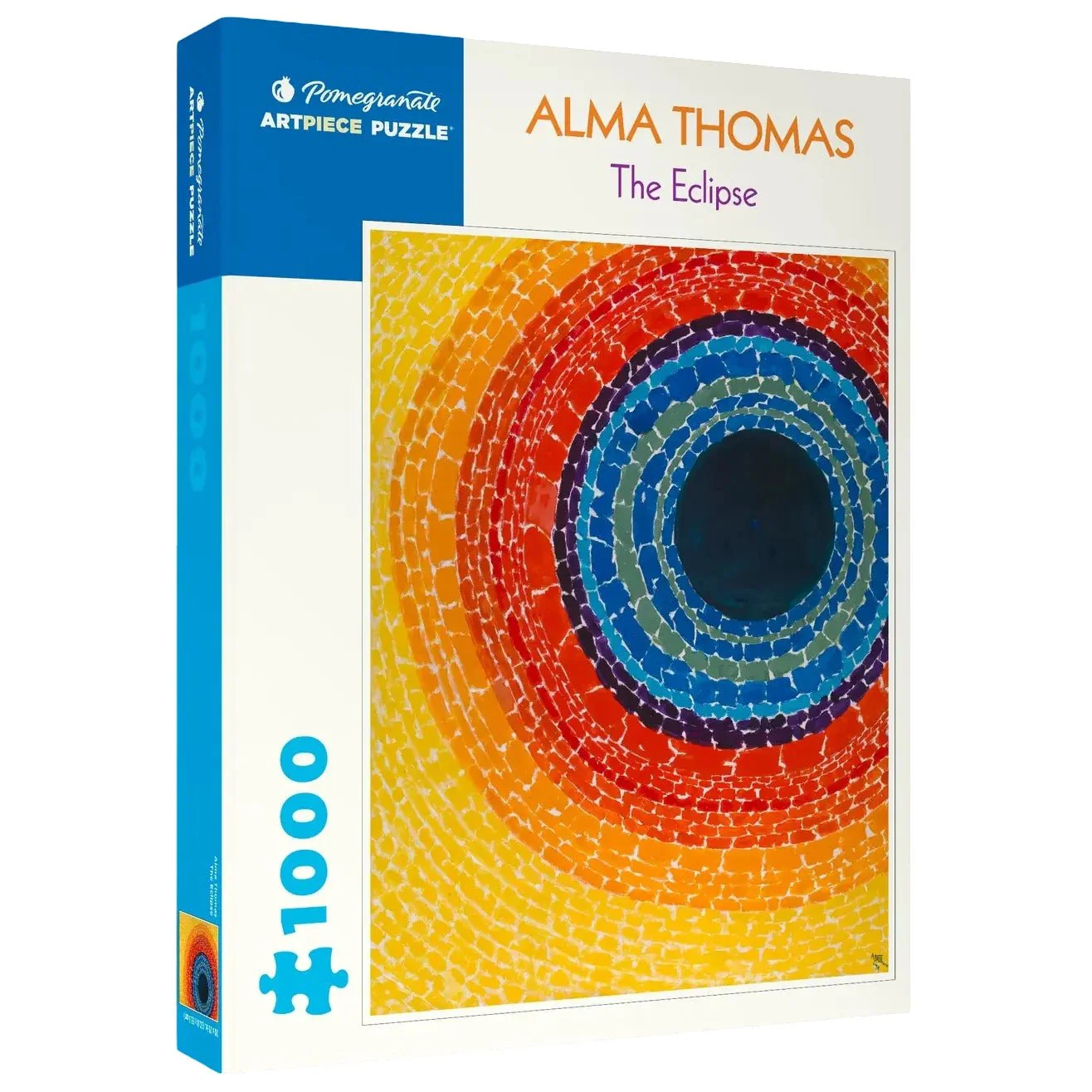
Witness the celestial wonder of a solar eclipse through the luminous vision of Alma Thomas with this stunning 1000-piece jigsaw puzzle featuring her iconic masterpiece, "The Eclipse." Created in 1970, this radiant painting captures one of Thomas's most celebrated works from her groundbreaking Space Paintings series, inspired by humanity's first steps on the moon and her lifelong fascination with the cosmos.
Alma Woodsey Thomas (1891-1978) lived an extraordinary life that defied every expectation for a Black woman born in 19th-century Georgia. Born in Columbus to a family that valued education and uplift, Thomas moved with her family to Washington, D.C., in 1907, seeking relief from the racial violence of the South and greater educational opportunities.
In 1924, she became Howard University's first fine arts graduate and the first woman of any race to earn an art degree from the institution. For the next 35 years, Thomas devoted herself to teaching art at Shaw Junior High School, establishing the first art gallery in D.C. public schools, and creating enrichment programs that touched an entire generation. She once said, "I devoted my life to the children, and they loved me."
It wasn't until 1960, when Thomas retired at age 68, that she became a full-time professional artist. Studying at American University with Jacob Kainen, she discovered Color Field painting and color theory, which transformed her practice completely. Within a decade, this late-blooming artist achieved what few accomplish in a lifetime: in 1972, at age 80, she became the first African American woman to have a solo exhibition at New York's prestigious Whitney Museum of American Art, and her work was selected for the White House's permanent art collection, making her the first Black woman so honored.
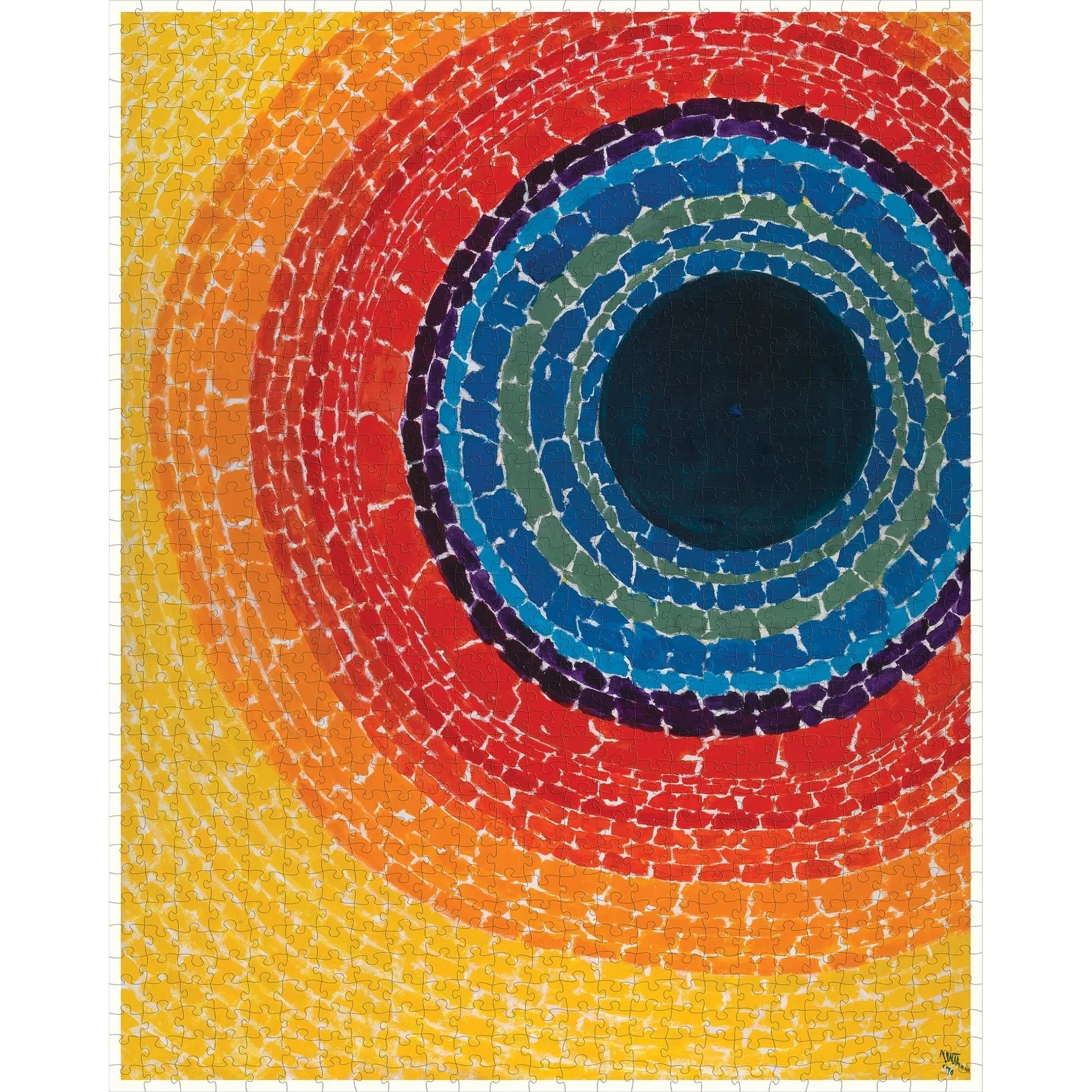
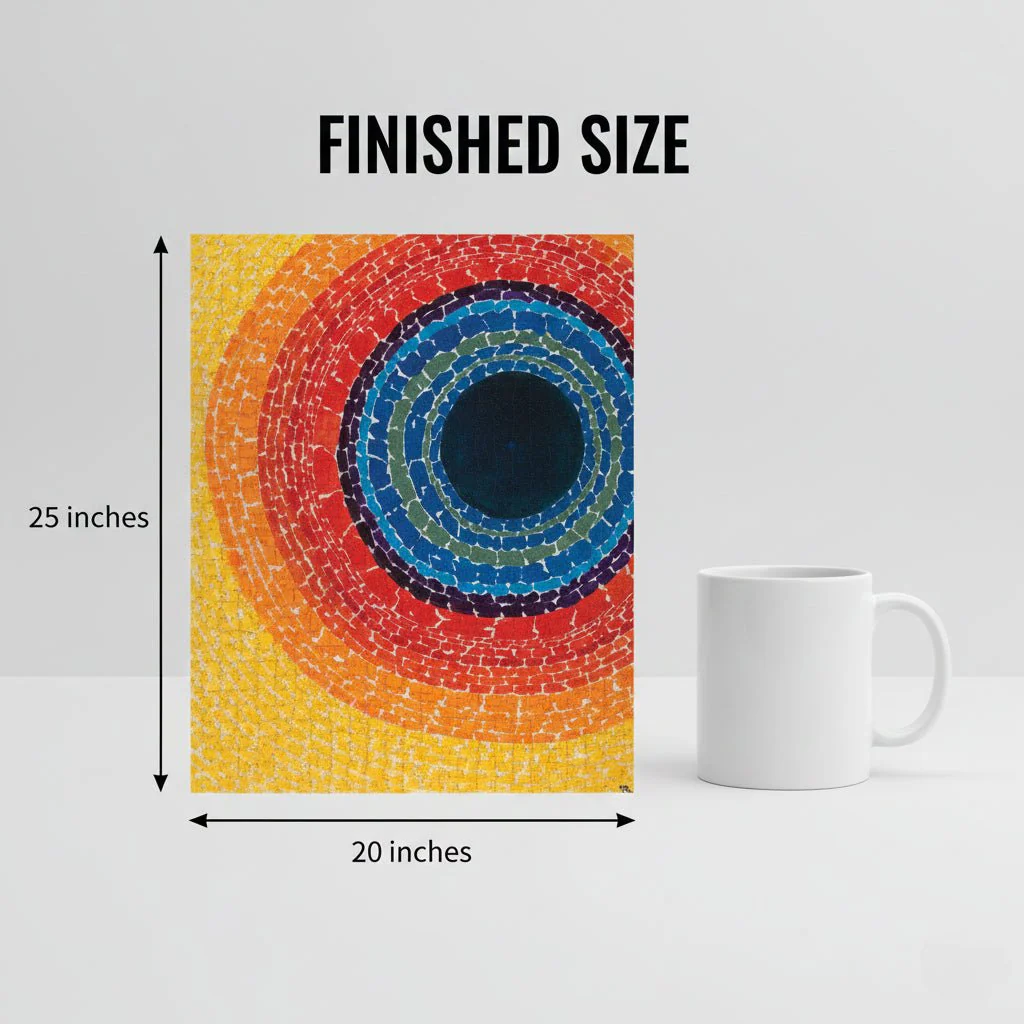
In this captivating puzzle image, Thomas captures the dramatic moment of a solar eclipse with breathtaking color and energy. A dark blue-black circle dominates the center, representing the moon's shadow as it covers the sun. Surrounding it, concentric circles radiate outward in brilliant bands of sage green, turquoise blue, deep purple, and rich red, finally bursting into fiery yellows and oranges at the outer edges.
Thomas's signature mosaic technique, short, rhythmic brushstrokes creating "Alma's Stripes" transforms the astronomical event into a symphony of color and pattern. The work emerged from her Space Paintings series, begun in 1969 when she became captivated by the Apollo moon landing and space exploration. She declared herself fascinated by the "heavens and stars" and by how NASA's photographs provided entirely new ways to see the world.
Thomas said of this period: "I was born in the horse and buggy days, and now experience the phenomenal changes of the 20th century machine and space age. Today, not only can our great scientists send astronauts to and from the moon to photograph its surface and bring back samples of rocks and other materials, but through the medium of color television, all can actually see and experience the thrill of these adventures. These phenomena set my creativity in motion."
Art historians have noted that Thomas's Space Paintings contribute to Afrofuturism, using celestial imagery as metaphor for Black liberation and imagination. Her paintings were not just interpretations of celestial bodies but transformative spaces to imagine a galactic elsewhere free of earthly constraints.
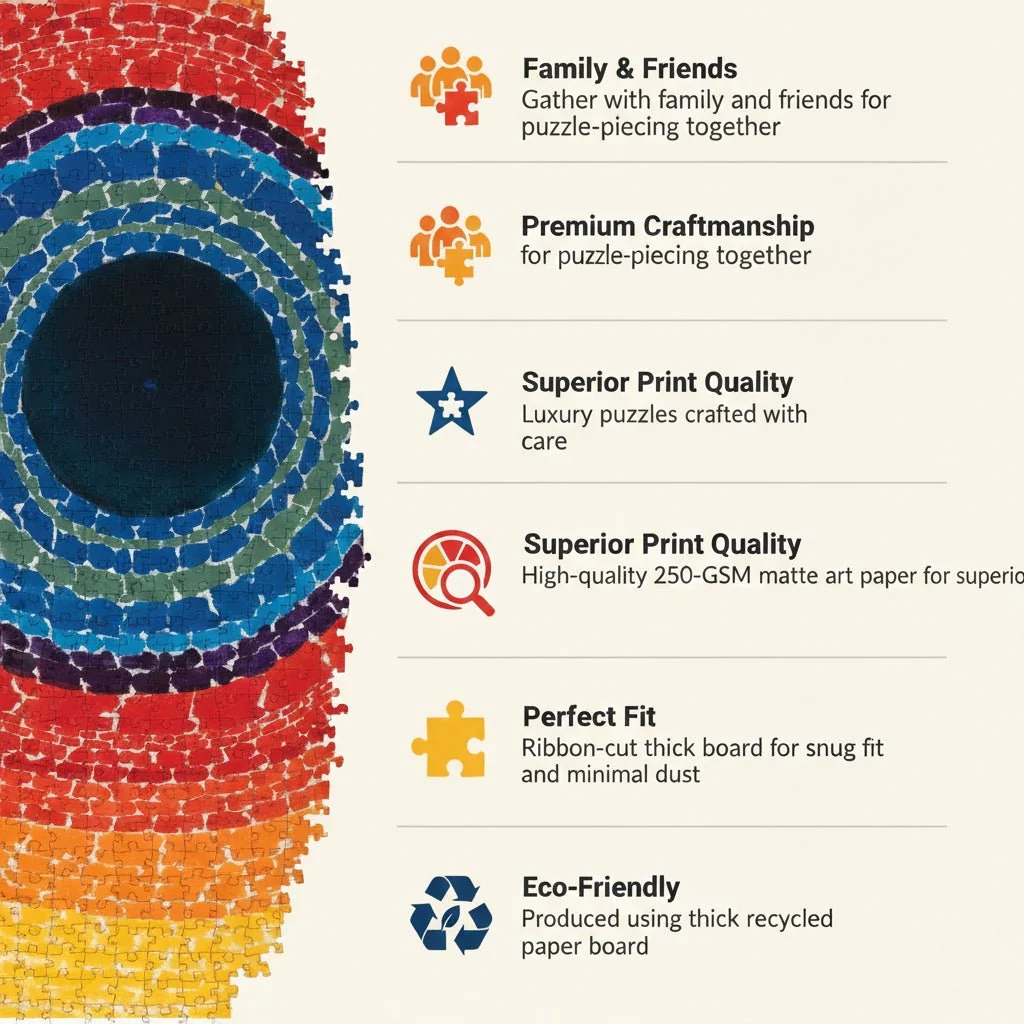
This luxury puzzle is meticulously crafted from thick, recycled paperboard, with a 250-GSM matte art paper that showcases Thomas's luminous palette and intricate brushwork without glare. The ribbon-cut pieces ensure a snug fit with minimal dust. Measuring 20" x 25" when completed, this puzzle transforms into a stunning display piece.
Thomas's work is held in major collections including the Smithsonian American Art Museum (which maintains the world's largest public collection), the Metropolitan Museum of Art, the National Gallery of Art, and the White House. Her painting "Alma's Flower Garden" sold for $2.8 million in 2021, cementing her place among America's most important artists.
Jigsaw puzzles offer a perfect respite from digital overwhelm while providing numerous mental wellness benefits. Focused concentration naturally reduces stress and anxiety, while improving cognitive function and problem-solving skills.
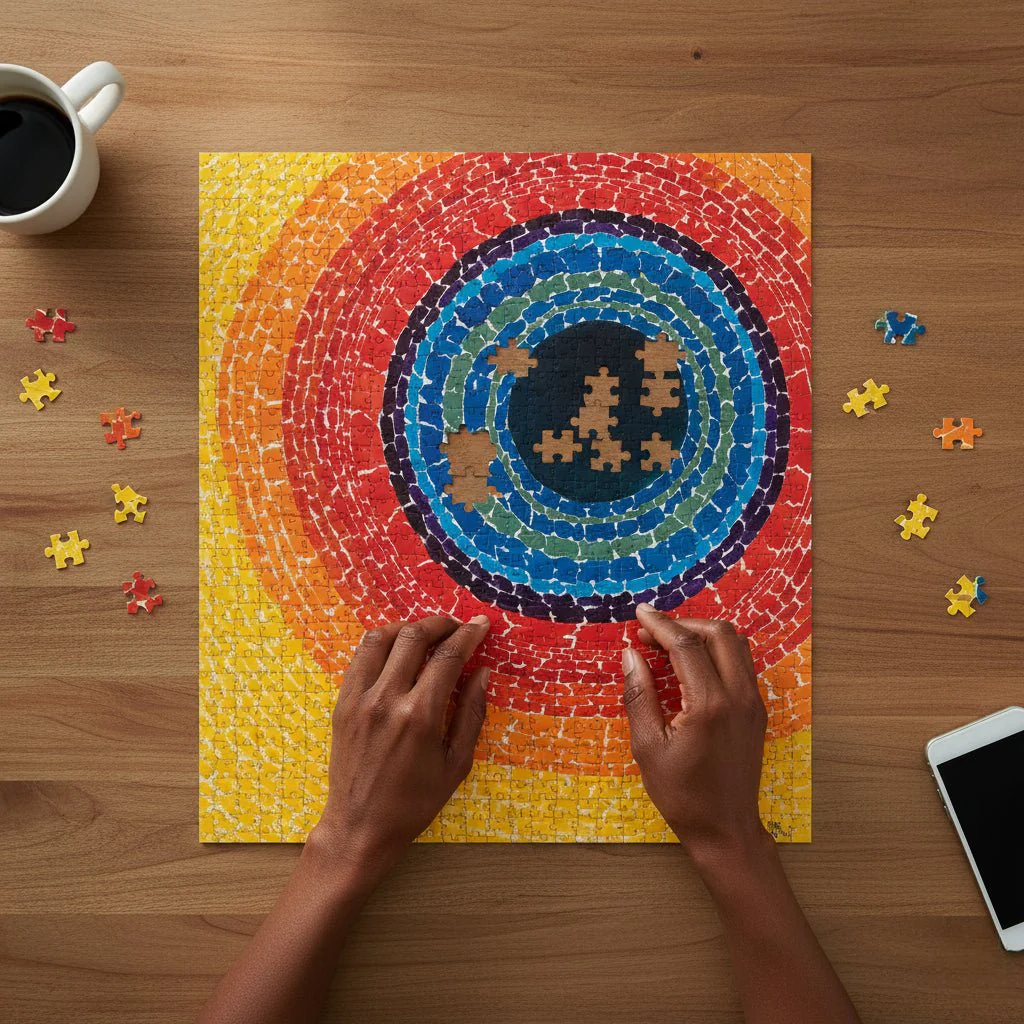
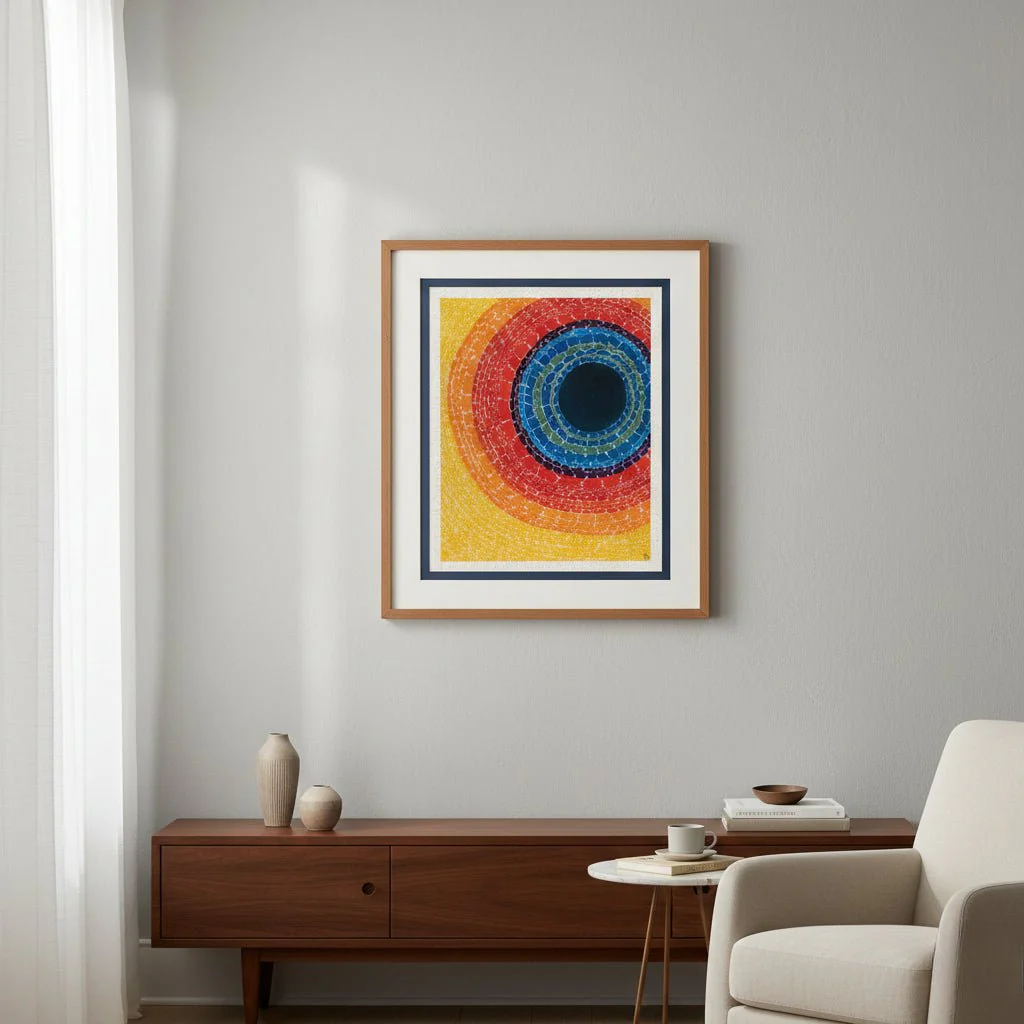
Gather with family and friends to create lasting memories through collaborative achievement, honoring Thomas's lifelong dedication to education and community. Once completed, your striking 20x25-inch masterpiece can be framed as extraordinary wall art that brings Thomas's cosmic vision into your home, gifted to art lovers and space enthusiasts, or carefully disassembled for future enjoyment.
Product Information
Product Information
Shipping & Returns
Shipping & Returns
The Eclipse Jigsaw Puzzle
The Eclipse Jigsaw Puzzle
Witness the celestial wonder of a solar eclipse through the luminous vision of Alma Thomas with this stunning 1000-piece jigsaw puzzle featuring her iconic masterpiece, "The Eclipse." Created in 1970, this radiant painting captures one of Thomas's most celebrated works from her groundbreaking Space Paintings series, inspired by humanity's first steps on the moon and her lifelong fascination with the cosmos.
Alma Woodsey Thomas (1891-1978) lived an extraordinary life that defied every expectation for a Black woman born in 19th-century Georgia. Born in Columbus to a family that valued education and uplift, Thomas moved with her family to Washington, D.C., in 1907, seeking relief from the racial violence of the South and greater educational opportunities.
In 1924, she became Howard University's first fine arts graduate and the first woman of any race to earn an art degree from the institution. For the next 35 years, Thomas devoted herself to teaching art at Shaw Junior High School, establishing the first art gallery in D.C. public schools, and creating enrichment programs that touched an entire generation. She once said, "I devoted my life to the children, and they loved me."
It wasn't until 1960, when Thomas retired at age 68, that she became a full-time professional artist. Studying at American University with Jacob Kainen, she discovered Color Field painting and color theory, which transformed her practice completely. Within a decade, this late-blooming artist achieved what few accomplish in a lifetime: in 1972, at age 80, she became the first African American woman to have a solo exhibition at New York's prestigious Whitney Museum of American Art, and her work was selected for the White House's permanent art collection, making her the first Black woman so honored.
In this captivating puzzle image, Thomas captures the dramatic moment of a solar eclipse with breathtaking color and energy. A dark blue-black circle dominates the center, representing the moon's shadow as it covers the sun. Surrounding it, concentric circles radiate outward in brilliant bands of sage green, turquoise blue, deep purple, and rich red, finally bursting into fiery yellows and oranges at the outer edges.
Thomas's signature mosaic technique, short, rhythmic brushstrokes creating "Alma's Stripes" transforms the astronomical event into a symphony of color and pattern. The work emerged from her Space Paintings series, begun in 1969 when she became captivated by the Apollo moon landing and space exploration. She declared herself fascinated by the "heavens and stars" and by how NASA's photographs provided entirely new ways to see the world.
Thomas said of this period: "I was born in the horse and buggy days, and now experience the phenomenal changes of the 20th century machine and space age. Today, not only can our great scientists send astronauts to and from the moon to photograph its surface and bring back samples of rocks and other materials, but through the medium of color television, all can actually see and experience the thrill of these adventures. These phenomena set my creativity in motion."
Art historians have noted that Thomas's Space Paintings contribute to Afrofuturism, using celestial imagery as metaphor for Black liberation and imagination. Her paintings were not just interpretations of celestial bodies but transformative spaces to imagine a galactic elsewhere free of earthly constraints.
This luxury puzzle is meticulously crafted from thick, recycled paperboard, with a 250-GSM matte art paper that showcases Thomas's luminous palette and intricate brushwork without glare. The ribbon-cut pieces ensure a snug fit with minimal dust. Measuring 20" x 25" when completed, this puzzle transforms into a stunning display piece.
Thomas's work is held in major collections including the Smithsonian American Art Museum (which maintains the world's largest public collection), the Metropolitan Museum of Art, the National Gallery of Art, and the White House. Her painting "Alma's Flower Garden" sold for $2.8 million in 2021, cementing her place among America's most important artists.
Jigsaw puzzles offer a perfect respite from digital overwhelm while providing numerous mental wellness benefits. Focused concentration naturally reduces stress and anxiety, while improving cognitive function and problem-solving skills.
Gather with family and friends to create lasting memories through collaborative achievement, honoring Thomas's lifelong dedication to education and community. Once completed, your striking 20x25-inch masterpiece can be framed as extraordinary wall art that brings Thomas's cosmic vision into your home, gifted to art lovers and space enthusiasts, or carefully disassembled for future enjoyment.
Product Information
Product Information
Shipping & Returns
Shipping & Returns
Description
Witness the celestial wonder of a solar eclipse through the luminous vision of Alma Thomas with this stunning 1000-piece jigsaw puzzle featuring her iconic masterpiece, "The Eclipse." Created in 1970, this radiant painting captures one of Thomas's most celebrated works from her groundbreaking Space Paintings series, inspired by humanity's first steps on the moon and her lifelong fascination with the cosmos.
Alma Woodsey Thomas (1891-1978) lived an extraordinary life that defied every expectation for a Black woman born in 19th-century Georgia. Born in Columbus to a family that valued education and uplift, Thomas moved with her family to Washington, D.C., in 1907, seeking relief from the racial violence of the South and greater educational opportunities.
In 1924, she became Howard University's first fine arts graduate and the first woman of any race to earn an art degree from the institution. For the next 35 years, Thomas devoted herself to teaching art at Shaw Junior High School, establishing the first art gallery in D.C. public schools, and creating enrichment programs that touched an entire generation. She once said, "I devoted my life to the children, and they loved me."
It wasn't until 1960, when Thomas retired at age 68, that she became a full-time professional artist. Studying at American University with Jacob Kainen, she discovered Color Field painting and color theory, which transformed her practice completely. Within a decade, this late-blooming artist achieved what few accomplish in a lifetime: in 1972, at age 80, she became the first African American woman to have a solo exhibition at New York's prestigious Whitney Museum of American Art, and her work was selected for the White House's permanent art collection, making her the first Black woman so honored.
In this captivating puzzle image, Thomas captures the dramatic moment of a solar eclipse with breathtaking color and energy. A dark blue-black circle dominates the center, representing the moon's shadow as it covers the sun. Surrounding it, concentric circles radiate outward in brilliant bands of sage green, turquoise blue, deep purple, and rich red, finally bursting into fiery yellows and oranges at the outer edges.
Thomas's signature mosaic technique, short, rhythmic brushstrokes creating "Alma's Stripes" transforms the astronomical event into a symphony of color and pattern. The work emerged from her Space Paintings series, begun in 1969 when she became captivated by the Apollo moon landing and space exploration. She declared herself fascinated by the "heavens and stars" and by how NASA's photographs provided entirely new ways to see the world.
Thomas said of this period: "I was born in the horse and buggy days, and now experience the phenomenal changes of the 20th century machine and space age. Today, not only can our great scientists send astronauts to and from the moon to photograph its surface and bring back samples of rocks and other materials, but through the medium of color television, all can actually see and experience the thrill of these adventures. These phenomena set my creativity in motion."
Art historians have noted that Thomas's Space Paintings contribute to Afrofuturism, using celestial imagery as metaphor for Black liberation and imagination. Her paintings were not just interpretations of celestial bodies but transformative spaces to imagine a galactic elsewhere free of earthly constraints.
This luxury puzzle is meticulously crafted from thick, recycled paperboard, with a 250-GSM matte art paper that showcases Thomas's luminous palette and intricate brushwork without glare. The ribbon-cut pieces ensure a snug fit with minimal dust. Measuring 20" x 25" when completed, this puzzle transforms into a stunning display piece.
Thomas's work is held in major collections including the Smithsonian American Art Museum (which maintains the world's largest public collection), the Metropolitan Museum of Art, the National Gallery of Art, and the White House. Her painting "Alma's Flower Garden" sold for $2.8 million in 2021, cementing her place among America's most important artists.
Jigsaw puzzles offer a perfect respite from digital overwhelm while providing numerous mental wellness benefits. Focused concentration naturally reduces stress and anxiety, while improving cognitive function and problem-solving skills.
Gather with family and friends to create lasting memories through collaborative achievement, honoring Thomas's lifelong dedication to education and community. Once completed, your striking 20x25-inch masterpiece can be framed as extraordinary wall art that brings Thomas's cosmic vision into your home, gifted to art lovers and space enthusiasts, or carefully disassembled for future enjoyment.